Insights
Delving into the intricate tapestry of world history is an endeavor that unveils the inextricable
interconnectedness of human civilizations across the expanse of time and geography. This
multifaceted narrative, woven from the threads of conquest and conflict, cultural exchange and
technological innovation, serves as a testament to the resilience and ingenuity of the human
spirit.
At the vanguard of this exploration stands the cradle of civilization, the fertile lands of
Mesopotamia, where the Sumerians etched the earliest known writings onto clay tablets, laying
the foundations for the subsequent flourishing of great empires like Babylon and Assyria. This
region, cradled between the Tigris and Euphrates Rivers, witnessed the birth of organized
religion, intricate legal systems, and groundbreaking advancements in agriculture and
architecture.
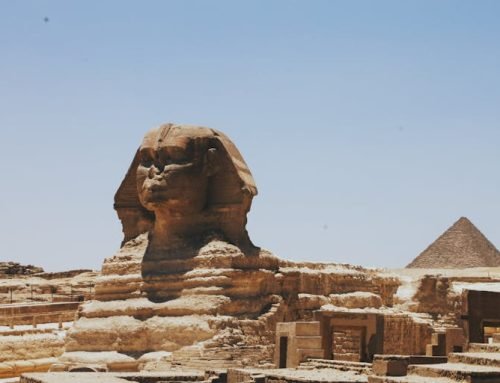
Traversing the vast expanses of the ancient world, one encounters the resplendent grandeur of
the Egyptian dynasties, whose monumental pyramids and hieroglyphic inscriptions continue to
captivate scholars and laymen alike. The pharaohs’ quest for immortality gave rise to a rich
funerary culture, while their mastery of engineering and astronomy yielded awe-inspiring
achievements that have withstood the inexorable march of time.
Eastward, the ancient civilizations of India and China emerged as beacons of philosophical and
cultural enlightenment. The Indus Valley Civilization, with its well-planned cities and advanced
drainage systems, laid the groundwork for the subsequent flourishing of Hinduism and
Buddhism, whose profound teachings continue to shape the spiritual landscape of the
subcontinent. Concurrently, the dynasties of China, from the Han to the Tang, ushered in an era
of remarkable technological and artistic advancements, including the invention of paper, the
compass, and the art of calligraphy.
In the Mediterranean basin, the classical civilizations of Greece and Rome left an indelible mark
on the annals of human history. The ancient Greeks, with their penchant for philosophy,
democracy, and artistic expression, bequeathed to the world the enduring legacies of Socrates,
Plato, and Aristotle, while their architectural marvels, such as the Parthenon, stand as
testaments to their aesthetic genius. The Roman Empire, through its expansive reach and military
prowess, disseminated its legal and administrative systems, laying the foundations for the
subsequent development of Western civilization.
The Middle Ages, often perceived as a period of darkness and stagnation, witnessed the
emergence of the Byzantine Empire, a cultural and religious crucible that preserved and
propagated the knowledge of the ancient world. Simultaneously, the rise of Islam in the Arabian
Peninsula ushered in a golden age of scientific and intellectual pursuits, with scholars like
Avicenna and Al-Khwarizmi making groundbreaking contributions to fields ranging from
mathematics to medicine.
As the curtain rises on the modern era, the Renaissance in Europe heralded a rebirth of classical
learning and artistic expression, with luminaries such as Leonardo da Vinci, Michelangelo, and
Galileo leaving an indelible mark on the cultural and scientific landscapes. This period of
intellectual ferment paved the way for the Age of Exploration, which saw intrepid navigators like
Christopher Columbus, Vasco da Gama, and Ferdinand Magellan venture into uncharted
territories, forever altering the course of global interactions and laying the foundations for the
colonial empires that would dominate the subsequent centuries.
The Industrial Revolution, which took root in Britain during the 18th century, ushered in a
paradigm shift that transformed the very fabric of human existence. The harnessing of steam
power and the advent of mechanized production catalyzed an unprecedented surge in economic
growth, urbanization, and technological advancements, reverberating across the globe and
setting the stage for the modern world as we know it.
As the 20th century dawned, the world witnessed two cataclysmic world wars that reshaped the
geopolitical landscape and unleashed the terrifying power of nuclear weapons. The aftermath of
these conflicts gave birth to a bipolar world order, with the United States and the Soviet Union
engaged in a protracted Cold War that threatened to engulf the planet in a nuclear conflagration.
Concurrently, the decolonization movements across Africa and Asia ushered in a new era of selfdetermination and national sovereignty, forever altering the global power dynamics.
In the contemporary era, the forces of globalization and technological innovation have rendered
the world increasingly interconnected, with the rapid dissemination of information and ideas
transcending traditional boundaries. The rise of multinational corporations and international
organizations has fostered economic and political interdependence, while environmental
challenges, such as climate change and resource depletion, have underscored the imperative for
global cooperation and sustainable development.
Through this panoramic exploration of world history, one cannot help but be awestruck by the
sheer breadth and complexity of human endeavors, the triumphs and tragedies that have shaped
our collective narrative. From the ancient civilizations that laid the foundations of human
civilization to the modern era’s grappling with the challenges of a globalized world, this intricate
tapestry serves as a testament to the indomitable spirit of humanity, its capacity for adaptation,
and its relentless pursuit of knowledge and progress.
As we stand at the precipice of an ever-evolving future, it is essential to embrace the lessons of
history, to draw inspiration from the resilience of our ancestors, and to chart a course that
fosters unity, peace, and sustainable coexistence. For it is only through an understanding of our
shared past that we can forge a path towards a future where the boundless potential of human
ingenuity can flourish, unencumbered by the shackles of ignorance and conflict.