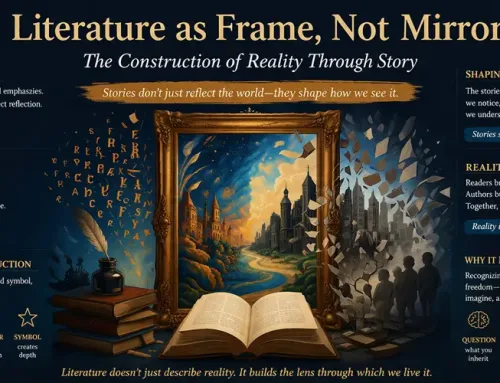
Insights
The world of literature is vast, encompassing myriad genres, styles, and periods. The analysis of
literary works and authors offers a profound understanding of human experiences, cultural
dynamics, and historical contexts. This article delves into the intricacies of literary analysis,
examining the works of seminal authors, and presenting data-driven insights to foster a deeper
appreciation of literature.
Historical Context and Authorial Intent
Understanding a literary work necessitates an exploration of its historical context and the
author’s intentions. For instance, Charles Dickens’ “Great Expectations” (1861) reflects the
socio-economic conditions of Victorian England. Dickens critiques the class disparities and the
impact of the Industrial Revolution through the protagonist, Pip. Similarly, Mary Shelley’s
“Frankenstein” (1818) can be analyzed through the lens of the Romantic movement and the
scientific advancements of the era. Shelley’s work interrogates the ethics of scientific
experimentation and the consequences of unrestrained ambition.
Thematic Exploration
Themes are the fundamental ideas explored in literary works. For example, in Fyodor
Dostoevsky’s “Crime and Punishment” (1866), the theme of redemption is central. Raskolnikov’s
journey from moral ambiguity to seeking atonement exemplifies Dostoevsky’s exploration of
guilt, punishment, and salvation. Similarly, in Toni Morrison’s “Beloved” (1987), the theme of
slavery and its haunting legacy is examined. Morrison’s nuanced portrayal of Sethe’s struggle
with her past provides a poignant commentary on the enduring scars of slavery.
Character Development and Psychological Depth
Character analysis is pivotal in literary critique. In “Hamlet” by William Shakespeare, the titular
character’s psychological complexity is a focal point. Hamlet’s vacillation, his existential
musings, and his quest for vengeance are analyzed through various critical lenses, including
psychoanalytic theory. Conversely, Jane Austen’s “Pride and Prejudice” (1813) presents
characters like Elizabeth Bennet and Mr. Darcy, whose development is traced through their
evolving perceptions and societal interactions. Austen’s keen social commentary is evident in her
portrayal of character arcs and their adherence to or deviation from societal norms.
Stylistic and Structural Analysis
The stylistic and structural elements of literary works significantly contribute to their impact.
James Joyce’s “Ulysses” (1922) is renowned for its stream-of-consciousness technique and
intricate structure, which mimic the complexities of human thought. Joyce’s innovative use of
language and form challenges traditional narrative conventions, offering a rich tapestry for
analysis. Similarly, Virginia Woolf’s “To the Lighthouse” (1927) employs a nonlinear narrative and
a fluid stream-of-consciousness style to explore themes of time, memory, and the ephemeral
nature of human existence.
Literary Movements and Genre Analysis
Literary works are often situated within specific movements and genres. The Romantic
movement, characterized by an emphasis on emotion and nature, finds expression in the works
of poets like William Wordsworth and Samuel Taylor Coleridge. Wordsworth’s “Lines Composed a
Few Miles Above Tintern Abbey” (1798) exemplifies Romantic ideals through its celebration of
nature and introspective tone. On the other hand, the Modernist movement, with its focus on
fragmentation and existentialism, is exemplified in T.S. Eliot’s “The Waste Land” (1922). Eliot’s
work, with its allusions to classical literature and disjointed narrative, reflects the disillusionment
of the post-World War I era.
Intertextuality and Influence
Intertextuality, or the relationship between texts, is a crucial aspect of literary analysis. For
example, “Wide Sargasso Sea” (1966) by Jean Rhys serves as a prequel to Charlotte Brontë’s
“Jane Eyre” (1847). Rhys’s novel reimagines the backstory of Bertha Mason, providing a
postcolonial critique of Brontë’s work. This intertextual dialogue enriches the reading of both
novels, offering new perspectives on themes of identity, race, and colonialism. Similarly,
Margaret Atwood’s “The Penelopiad” (2005) reinterprets Homer’s “The Odyssey” from
Penelope’s perspective, challenging traditional gender narratives and highlighting the multiplicity
of voices in literature.
Data-Driven Insights and Literary Trends
The advent of digital humanities has revolutionized literary analysis by providing data-driven
insights. Text mining and computational analysis reveal patterns and trends in literary works. For
instance, a study of word frequency in Jane Austen’s novels might highlight her emphasis on
social relationships and moral virtues. Similarly, sentiment analysis of Charles Dickens’ works
could provide quantifiable data on his portrayal of social issues and character emotions.
Data also sheds light on publishing trends and authorial productivity. An analysis of publication
data might reveal that the 19th century saw a proliferation of novels addressing industrialization
and its societal impact. This trend aligns with historical events such as the Industrial Revolution
and its socio-economic ramifications.
Complex Arguments and Critical Perspectives
Literary analysis often involves complex arguments and diverse critical perspectives. For
example, feminist critiques of Shakespeare’s works interrogate the representation of gender and
power dynamics. In “The Taming of the Shrew,” critics debate whether the play subverts or
reinforces patriarchal norms. Similarly, postcolonial critiques of Joseph Conrad’s “Heart of
Darkness” (1899) examine the depiction of Africa and its people, questioning the colonialist
ideologies embedded in the text.
Marxist criticism offers another layer of analysis, focusing on class struggle and economic power.
In Charles Dickens’ “Oliver Twist” (1837-39), a Marxist reading might highlight the exploitation of
the working class and the capitalist structures that perpetuate inequality. Psychoanalytic
criticism, on the other hand, delves into the unconscious motivations of characters and authors.
A Freudian analysis of Edgar Allan Poe’s “The Tell-Tale Heart” (1843) might explore themes of
guilt, repression, and the uncanny.
The analysis of literary works and authors is a multifaceted endeavor, encompassing historical
context, thematic exploration, character development, stylistic and structural analysis, and
intertextuality. By employing data-driven insights and engaging with complex critical
perspectives, readers can gain a deeper appreciation of literature’s richness and diversity. This
comprehensive approach not only enhances our understanding of individual texts but also
illuminates the broader cultural and historical forces that shape literary production. Through
meticulous analysis, we uncover the enduring relevance of literature and its capacity to reflect
and transform human experience.