Insights
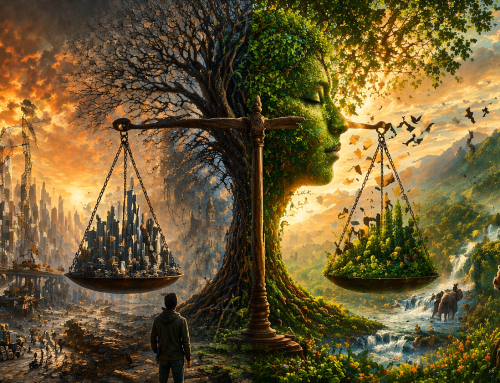
The idea that nature, left undisturbed, tends toward a stable and harmonious equilibrium is one of the most durable and most consequential misconceptions in the history of environmental thought. It underlies the romantic tradition in landscape aesthetics, the early conservation movement’s concept of wilderness as pristine and self-regulating, and much of the popular understanding of what ecological damage consists in — the disturbance of a system that would, if left alone, return to its natural balance.
The scientific basis for this idea was the concept of the climax community, developed by the American ecologist Frederic Clements in the early twentieth century: the idea that ecological succession tends toward a stable endpoint determined by the regional climate, which represents the natural state of that ecosystem. Disturb the climax and you damage nature. Protect the climax and you preserve it.
This vision was scientifically attractive, theoretically elegant, and substantially wrong. The dismantling of the Clementsian paradigm over the second half of the twentieth century is one of the most consequential episodes in the history of ecology. The first major challenge came from Henry Gleason, who argued as early as 1926 that plant communities are not superorganisms tending toward predetermined climaxes but contingent assemblages — the products of the individual responses of species to environmental gradients, migration histories, and chance events. Communities, for Gleason, have no inherent tendency toward stability. They are always in flux, and the appearance of equilibrium is an artefact of the timescale on which we observe them.
The paleoecological record provided the most devastating evidence against the equilibrium paradigm. As techniques for reconstructing past vegetation from pollen preserved in lake sediments improved through the 1970s and 1980s, ecologists discovered that the species assemblages of the present are geologically recent and historically unprecedented.
The temperate forests of eastern North America, which conservationists had imagined as the climax communities of those regions, had been assembled in their current form only within the past ten thousand years — and they had been assembled individualistically, each species tracking its own climatic tolerances rather than as intact communities moving together. The ecological communities we see today are not the products of long evolutionary co-adaptation. They are contingent, transient configurations whose histories of association are far shorter than the appearance of integration suggests.
The ecologist Daniel Botkin crystallised these findings in his 1990 book Discordant Harmonies, arguing that the central metaphor of nature as a self-regulating machine in balance was not merely empirically wrong but actively harmful. If nature is inherently dynamic — if change, disturbance, and non-equilibrium are the norm rather than the exception — then the conservation goal of preserving or restoring a fixed natural state is not merely difficult but conceptually confused.
There is no pristine baseline to which disturbed ecosystems can be returned, because the ecosystems that existed before human disturbance were themselves products of prior disturbances — glaciations, volcanic events, sea level changes, the extinctions of megafauna — and were always in the process of changing.
This has profound implications for how we think about the relationship between human activity and the natural world. The sharp distinction between nature and culture — between the pristine wilderness that exists independently of human action and the degraded landscape that results from it — turns out to be both ecologically unfounded and historically recent.
Humanity has been modifying ecosystems through fire, hunting, agriculture, and landscape management for tens of thousands of years, and many of the landscapes that the conservation movement sought to protect as natural were in fact the products of millennia of indigenous land management. The Amazon rainforest, long imagined as the paradigm case of pristine wilderness, is now understood by archaeologists and ecologists to be substantially a cultural landscape — shaped by centuries of indigenous settlement, cultivation, and deliberate management of species distributions.
The philosopher and environmental ethicist Holmes Rolston III has argued that the collapse of the equilibrium paradigm does not undermine the case for conservation but requires its reformulation. If there is no stable natural baseline, conservation cannot be about preservation — holding ecosystems fixed in a particular state.
It must be about sustaining the processes — evolutionary, ecological, hydrological, geochemical — through which living systems generate and maintain biological complexity and resilience over time. What we are trying to protect is not a particular configuration of species but the capacity of living systems to adapt, diversify, and persist through change. This is a more demanding and more honest conservation goal than the preservation of a romanticised wilderness, and it requires engagement with the dynamics of change rather than their suppression.
The climate crisis makes this reformulation urgent. The changes now underway in global climate systems are occurring at rates that challenge the adaptive capacity of most ecosystems — not because change itself is unnatural but because the pace of anthropogenic change exceeds the evolutionary and ecological processes through which living systems respond.
The relevant question for conservation biology is therefore not how to restore a pre-human baseline — which never existed as a stable state — but how to maintain the conditions under which biological and ecological processes can continue to operate as climate systems shift.
What the science of ecology ultimately tells us about our place in the natural world is something more disquieting than the romantic tradition anticipated: we are not the disturbance in an otherwise harmonious system. We are one of many forces of change in a world that has never been still — and the question of how to live well within that world cannot be answered by looking for a lost paradise of balance that was never there.