Insights
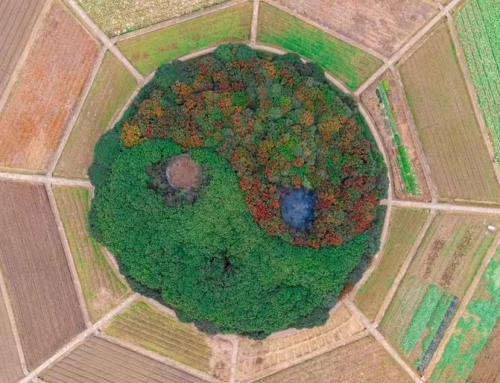
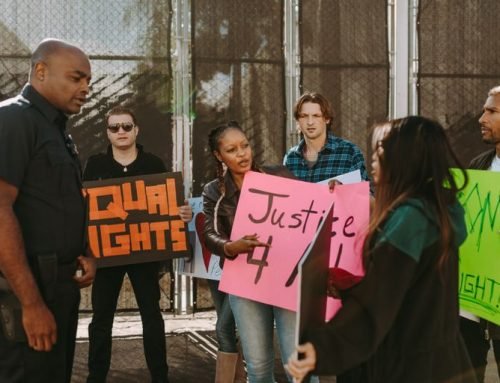
Interpretation shapes how we value nature, influencing the conflict between development and conservation in modern society.
Nature does not have a meaning. It has a condition. The distinction matters more than it might appear, because the history of human civilisation is largely a history of projecting meanings onto natural conditions and then mistaking those projections for facts. When a river floods a village, the river has not behaved badly. It has behaved exactly as rivers behave.
The moral weight — the punishment, the warning, the divine signal — is added by the human mind that cannot tolerate an event without an interpretation. This need to interpret is not a weakness. It is, in fact, the cognitive engine that built every culture on earth. But it becomes dangerous when we forget that the interpretation is ours, not natures.
The modern environmental debate is, at its core, a collision of interpretations. One tradition, rooted in Enlightenment economics and deepened by the Industrial Revolution, reads nature primarily as resource — as standing timber, as mineral deposit, as cultivable land, as a sink for industrial waste. This reading is not irrational.
It produced the material conditions that lifted hundreds of millions of people out of poverty across the nineteenth and twentieth centuries. Its logic is internally consistent: nature has value insofar as it serves human need, and human need is the measure of all value. The problem with this reading is not that it is wrong in its own terms. The problem is that it is incomplete — its prices what it can measure and ignores what it cannot.
The ecological tradition offers a counter-reading. Here, nature is not a collection of resources waiting to be activated by human use. It is a system — deeply interconnected, self-regulating, and operating on timescales that make human economic cycles look like brief interruptions. A forest, in this view, is not simply timber. It is a hydrological regulator, a carbon repository, a biodiversity habitat, and a climate stabiliser, many of whose functions have no market price because no market has yet found a way to charge for them.
This is the argument behind ecosystem services valuation — the attempt, now mainstream in environmental economics, to assign monetary figures to functions like flood prevention, pollination, and atmospheric regulation. The Dasgupta Review, commissioned by the UK Treasury in 2021, estimated that between 1992 and 2014, the value of natural capital per person fell by nearly forty percent globally, even as GDP per person rose. The numbers were growing. The foundation beneath the numbers was eroding.
What makes this debate resistant to easy resolution is that both sides are, in part, responding to real needs. The argument for development is not simply greed — it is, in many parts of the world, an argument for survival, for food security, for children who do not die of preventable illness. The argument for conservation is not simply sentiment — it is, increasingly, an argument backed by atmospheric chemistry, hydrology, and ecology.
The difficulty is that these two arguments operate on different timescales and serve different constituencies. Development serves the living. Conservation argues on behalf of those not yet born, and on behalf of species that cannot argue for themselves. Democratic systems are structurally poor at making decisions whose costs are immediate and whose benefits are distributed across centuries.
This is where perception becomes politics. How a society reads nature — as resource or as system, as property or as commons, as something to be used or something to be sustained — determines not just its environmental policy but its economic architecture, its legal frameworks, and its relationship to future generations.
These readings are not politically neutral. They are embedded in land ownership patterns, in colonial histories, in the financial interests of industries whose profitability depends on nature remaining under-priced. To change environmental outcomes, it is not enough to present better data. One must first understand why the existing interpretation is so deeply held, by whom, and in whose interest, it operates.
Seeing nature clearly requires more than scientific literacy. It requires the willingness to examine the economic and cultural lenses through which we have always already been looking — and to ask whether those lenses were ground to help us see, or to help us take.