Insights
Understanding where you are in the world is a basic survival skill, which is why we, like most
species, come hard-wired with specialized brain areas to create cognitive maps of our
surroundings. Where humans are unique, though, with the possible exception of honeybees, is
that we try to communicate this understanding of the world with others. We have a long history
of doing this by drawing maps — the earliest versions yet discovered were scrawled on cave
walls 14,000 years ago. Human cultures have been drawing them on stone tablets, papyrus,
paper, and now computer screens ever since.
Given such a long history of human map-making, it is perhaps surprising that it is only within the
last few hundred years that north has been consistently considered to be at the top. In fact, for
much of human history, north almost never appeared at the top, according to Jerry Brotton, a
map historian. “North was rarely put at the top for the simple fact that north is where darkness
comes from,” he says. “West is also very unlikely to be put at the top because west is where the
sun disappears.”
Confusingly, early Chinese maps seem to buck this trend. But, Brotton says, even though they
did have compasses at the time, that isn’t the reason they placed north at the top. Early Chinese
compasses were actually oriented to point south, which was considered to be more desirable
than the deepest darkest north. But in Chinese maps, the emperor, who lived in the north of the
country, was always put at the top of the map, with everyone else, his loyal subjects, looking up
towards him. “In Chinese culture, the Emperor looks south because it’s where the winds come
from, it’s a good direction. North is not very good, but you are in a position of subjection to the
emperor, so you look up to him,” says Brotton.
Given that each culture has a very different idea of who, or what, they should look up to, it’s
perhaps not surprising that there is very little consistency in which way early maps pointed. In
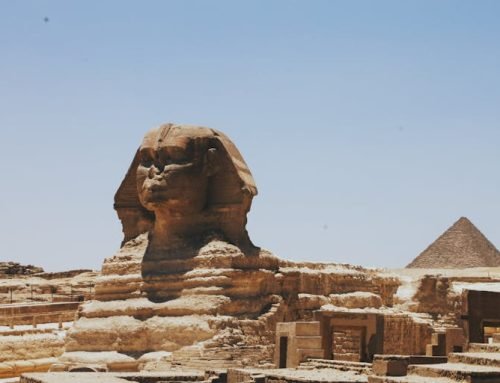
ancient Egyptian times, the top of the world was east, the position of sunrise. Early Islamic maps
favored south at the top because most of the early Muslim cultures were north of Mecca, so they
imagined looking up (south) towards it. Christian maps from the same era (called Mappa Mundi)
put east at the top, towards the Garden of Eden and with Jerusalem in the center.
So when did everyone get together and decide that north was the top? It’s tempting to put it
down to European explorers like Christopher Columbus and Ferdinand Magellan who were
navigating by the North Star. But Brotton argues that these early explorers didn’t think of the
world like that at all. “When Columbus describes the world it is in accordance with east being at
the top,” he says. “Columbus says he is going towards paradise, so his mentality is from a
medieval mappa mundi.” We’ve got to remember, adds Brotton, that at the time, “no one knows
what they are doing and where they are going.”