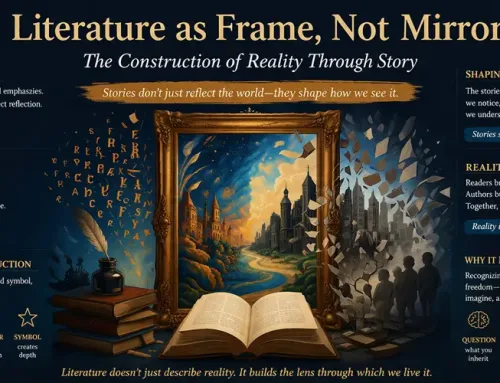
Insights
Literary criticism serves as the lens through which we examine and interpret literary texts,
offering insights into their deeper meanings, themes, and significance. This multifaceted
discipline encompasses various approaches and methodologies, each shedding light on different
aspects of literature. To appreciate the richness of literary criticism, one must delve into the
intricacies of analyzing both classic and modern works, each presenting unique challenges and
opportunities for critique.
Historical Context and Canonical Texts
The examination of classic literature often begins with an understanding of the historical context
in which the work was produced. Classical texts, such as Homer’s Iliad and Shakespeare’s
Hamlet, are embedded within their respective historical and cultural milieus. Literary critics must
consider the socio-political and philosophical landscapes of these periods to fully grasp their
nuances.
For instance, The Iliad, composed in the 8th century BCE, is not merely an epic about the Trojan
War but a reflection of ancient Greek values and beliefs. Scholars like Richard Janko have
analyzed its oral traditions and narrative techniques, revealing how Homeric epic poetry
functions as a medium for cultural memory and ideological expression. The recurrent themes of
honor, fate, and the divine are thus understood within the context of a society deeply invested in
heroic ideals and religious practices.
Similarly, Hamlet, written in the early 17th century, provides a rich tapestry for psychoanalytic
and existential criticism. Freud’s interpretation of Hamlet’s Oedipal complex offers a lens through
which to view the protagonist’s internal struggles and motivations. Critics like Harold Bloom have
expanded upon this, exploring the play’s profound meditation on identity, mortality, and the
nature of action. Shakespeare’s exploration of the human psyche is thus illuminated by
understanding the Elizabethan worldview and its philosophical inquiries.
Modern Works and Contemporary Theories
In contrast, modern literary works often challenge traditional paradigms, necessitating
contemporary approaches to criticism. Postmodernism, for example, questions the very notion of
fixed meanings and stable narratives. Works like Thomas Pynchon’s Gravity’s Rainbow defy
conventional structures and elicit varied interpretations.
Pynchon’s novel, with its labyrinthine plot and fragmented style, exemplifies the postmodern
emphasis on metafiction and intertextuality. Literary critics such as Brian McHale have explored
how Pynchon’s text reflects postmodern concerns about reality and representation, illustrating
the tension between historical narrative and subjective experience. This approach highlights the
novel’s engagement with epistemological uncertainty and the blurring of boundaries between
fiction and reality.
Similarly, contemporary feminist and queer theories offer fresh perspectives on both classic and
modern texts. The feminist critique of Shakespeare’s The Taming of the Shrew reexamines
gender dynamics and power structures within the play. Critics like Kate M. Warren have argued
that the play’s seemingly patriarchal stance can be read as a critique of societal norms rather
than a straightforward endorsement of them.
In modern works, queer theory provides tools for analyzing texts that grapple with fluid and nonnormative sexualities. The works of authors like Jeanette Winterson, particularly in Oranges Are
Not the Only Fruit, are examined through queer theoretical lenses to uncover themes of identity,
resistance, and non-conformity. Critics like Eve Kosofsky Sedgwick emphasize the importance of
understanding how these texts challenge and reconfigure traditional notions of sexuality and
desire.
Interdisciplinary Approaches
Interdisciplinary approaches have significantly enriched literary criticism, merging insights from
various fields to deepen our understanding of texts. Psychoanalytic theory, for example, extends
beyond Shakespeare to modern works like Toni Morrison’s Beloved. Critics like Geoffrey Hartman
have employed psychoanalytic concepts to explore the psychological trauma and haunting
legacy of slavery portrayed in Morrison’s novel. This approach reveals how literature functions as
a medium for grappling with collective historical trauma and personal identity.
Similarly, postcolonial criticism offers valuable perspectives on texts emerging from colonial and
postcolonial contexts. Edward Said’s seminal work Orientalism has profoundly influenced how
critics analyze literature from the Middle East and South Asia. Said’s framework of examining
Western representations of the “Orient” exposes the power dynamics and cultural prejudices
embedded in colonial narratives.
In postcolonial literature, such as Chinua Achebe’s Things Fall Apart, critics examine how
colonialism impacts indigenous cultures and identities. Achebe’s novel serves as a counternarrative to colonialist depictions, offering an African perspective on the impacts of European
imperialism. This critical lens unveils the complexities of cultural exchange, resistance, and
transformation within postcolonial contexts.
The Role of Literary Theory
Literary theory, encompassing various schools of thought, underpins much of literary criticism.
Structuralism and semiotics, for instance, focus on the underlying structures and systems of
meaning within texts. Roland Barthes’ concept of the “death of the author” challenges the notion
of authorial intent as central to textual interpretation. This theory emphasizes the role of readers
in constructing meaning, aligning with poststructuralist views that highlight the fluidity and
multiplicity of interpretation.
Deconstruction, another influential theory developed by Jacques Derrida, interrogates binary
oppositions and the instability of meaning. Derrida’s approach reveals how texts subvert their
own structures and meanings, contributing to a deeper understanding of literary ambiguity and
complexity.
In contemporary literary criticism, reader-response theory emphasizes the active role of the
reader in interpreting texts. Critics like Stanley Fish argue that meaning is not inherent in the text
but constructed through the reader’s engagement and interpretative practices. This perspective
highlights the dynamic relationship between text and reader, acknowledging the subjective
nature of literary experience.
The analysis of classic and modern works through literary criticism reveals the depth and
complexity of literature as an art form. By engaging with historical contexts, contemporary
theories, and interdisciplinary approaches, critics illuminate the multifaceted nature of texts and
their significance within broader cultural and intellectual frameworks. From Homer’s epics to
Pynchon’s postmodern narratives, literary criticism provides valuable insights that enhance our
understanding of the human condition and the myriad ways in which literature reflects and
shapes our world. As such, it invites readers and scholars alike to continually explore and
question the boundaries of literary meaning and interpretation.