Insights
Political authority is often equated with the possession of power. Governments enact laws, levy taxes, and enforce compliance through institutional mechanisms that command obedience. Yet authority and power are not identical. Power may compel action; authority seeks legitimacy. The durability of political systems depends less on coercive capacity and more on the extent to which citizens perceive rule as justified.
Max Weber famously distinguished between traditional, charismatic, and legal-rational forms of authority. Each rests on a different basis of legitimacy: inherited custom, personal devotion, or adherence to formal rules. Modern states largely rely on legal-rational authority, presenting governance as a system of procedures rather than personalities. However, procedural legitimacy does not eliminate contestation. When laws are perceived as unjust or selectively enforced, formal legality fails to secure moral consent.
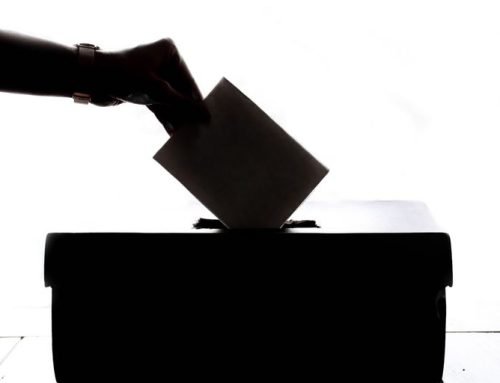
Democratic systems attempt to reconcile authority with popular sovereignty. Elections are intended to convert collective will into institutional mandate. Yet representation introduces distance between citizens and decision-makers. Mandates are interpreted, negotiated, and sometimes diluted through bureaucratic processes. The claim that electoral victory confers comprehensive legitimacy oversimplifies the layered nature of governance. Consent expressed at the ballot box does not resolve disagreements about policy substance.
Constitutional frameworks further complicate legitimacy. Written constitutions aspire to stabilise political order by entrenching foundational principles beyond immediate majority control. Judicial review empowers courts to interpret these principles, occasionally overturning legislative action. Supporters argue that this protects rights and minority interests; critics contend that unelected judges exercise disproportionate influence. The tension between democratic responsiveness and constitutional restraint remains unresolved.
In times of crisis, the balance between authority and liberty becomes particularly fragile. Emergency powers are justified as temporary necessities, yet history records instances where exceptional measures acquire permanence. The language of security can expand executive discretion while narrowing avenues of accountability. Public willingness to accept such expansion often depends on perceived threat levels rather than constitutional theory.
Legitimacy also operates at an international level. States recognise one another’s sovereignty, yet global institutions increasingly shape domestic policy through trade agreements, financial conditions, and human rights norms. National governments navigate pressures from both internal constituencies and external regimes. Authority, therefore, is distributed across overlapping layers rather than confined within territorial boundaries.
Political stability emerges when institutions manage these tensions without suppressing dissent. Systems that rely solely on coercion may survive temporarily but struggle to maintain long-term allegiance. Conversely, systems that prioritise consensus without enforcement risk paralysis. Governance requires calibration between responsiveness and structure, between flexibility and continuity.
Understanding politics through the lens of legitimacy rather than mere power clarifies why similar institutional forms function differently across societies. Authority is sustained not only by law but by shared belief in the fairness and necessity of those laws. When that belief erodes, formal structures remain but their moral force weakens. Political order, then, rests on a continuous negotiation between rule and recognition.