Insights
What happens when curiosity crosses its limits? “The Cost of Looking” explores truth, obsession, and the hidden price of seeing what was never meant to be seen.
There is a particular quality to the attention of a person looking at a screen. It is not the broad, roaming attention of someone gazing at a landscape, nor the deep, sustained attention of someone absorbed in a difficult text. It is something closer to a state of anxious readiness — a trained watchfulness for the signal that something new has arrived, that something has changed, that a response is required. This quality of attention is not accidental. It has been engineered.
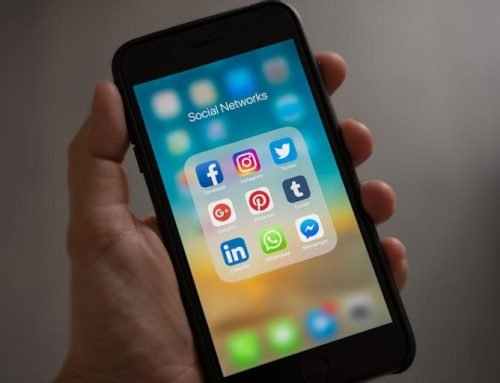
The business model that underlies most of the digital platforms through which contemporary life is increasingly organised is built on a single commodity: human attention. The platforms do not charge money for their services. They charge time — and more precisely, they sell the time and attentiveness of their users to advertisers.
This exchange appears frictionless, even generous. But it has a structure that its apparent generosity conceals. The platforms are not passive conduits for information. They are active systems, optimised through continuous algorithmic refinement to maximise the duration and intensity of user engagement. The metric that matters is not whether users find what they are looking for. It is whether they stay.
This optimisation has consequences for cognition that are only beginning to be understood. The psychologist Mihaly Csikszentmihalyi spent decades studying the conditions under which human beings experience what he called flow — states of deep, productive concentration in which a person is fully absorbed in a task that matches their capabilities.
These states, he found, are associated with satisfaction, creativity, and a sense of meaningful engagement with the world. They are also structurally incompatible with the kind of interrupted, notification-driven attention that digital platforms are designed to produce. Flow requires sustained focus. Platform design requires continuous interruption.
The economist and technologist Jaron Lanier has argued that the attention economy does not merely distract people; it degrades the epistemic quality of public life. When engagement is the primary metric, content that provokes strong emotional reactions — outrage, fear, tribalism — will consistently outperform content that is accurate, nuanced, or complex. This is not a coincidence or a side effect. It is a consequence of the optimisation function.
A platform that is maximally good at capturing attention will, under these conditions, tend to become maximally good at spreading misinformation, because misinformation, when it is emotionally resonant, is more engaging than accurate but emotionally flat information. The platform does not intend this outcome. It simply optimises for what its design rewards, and its design rewards what keeps people looking.
This creates a distinction that is easy to overlook. There is a difference between access to information and the capacity to process it well. The internet has produced, by any historical measure, a radical expansion of access to information. A person with a mobile phone can retrieve, within seconds, text that would have required a research library a generation ago.
But access and capacity are not the same thing. The ability to think carefully about information — to evaluate sources, to sit with complexity, to resist the pull of a compelling but false narrative — is a skill that requires practice, and practice requires the kind of sustained attention that the attention economy systematically erodes. We have built the largest library in human history and designed the architecture of that library to make deep reading as difficult as possible.
What is required is not a rejection of digital technology, which would be both impractical and, in many respects, a loss. What is required is a clearer understanding of what these systems are optimised for, and a willingness to distinguish between what they offer freely and what they extract silently. Every hour spent in the state of anxious watchfulness that platforms cultivate is an hour not spent in the state of deep focus that produces genuine understanding. The cost is real. It simply does not appear on any invoice.