Insights
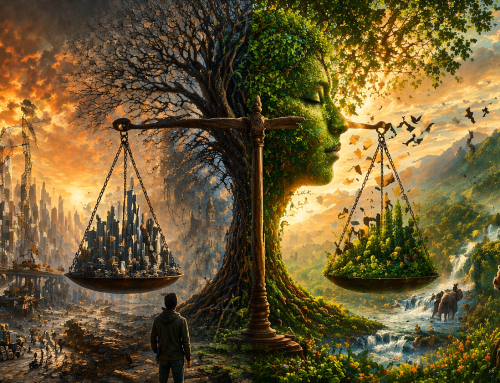
The growing popularity of “natural capital” as a framework for environmental conservation signals a paradigmatic shift in how nature is positioned within the epistemological and moral economies of the Anthropocene. On the surface, it appears as a pragmatic alliance between ecology and economics — an attempt to embed environmental preservation within the dominant logic of markets. Yet beneath this veneer of synergy lies a profound ontological rift: nature, which once transcended commodification, now pleads for survival through the grammar of cost-benefit analysis.
This conceptual merger, while ostensibly strategic, threatens to efface the moral distinctiveness of the natural world. Drawing from Arne Næss’s deep ecology (1973), which posits that all life has intrinsic value irrespective of its utility to humans, the natural capital model represents a dilution — a retreat from eco-philosophical radicalism into neoliberal pragmatism. Nature is not protected for its sacredness, but for its serviceability — a logic disturbingly proximate to colonial extractivism repackaged in corporate vernacular.
What is particularly problematic is the epistemic violence embedded in the attempt to quantify the unquantifiable. Valuing a rainforest based on its carbon sequestration capabilities not only misses its multi-dimensional role — spiritual, cultural, climatic, and medicinal — but actively marginalises indigenous epistemologies that have historically resisted reductionism. As Vandana Shiva notes in Staying Alive (1988), the economisation of ecological relationships is a form of “cognitive imperialism,” where local knowledges are subordinated to technocratic modes of understanding. The forest becomes a spreadsheet, not a sacred space.
Yet, proponents of natural capital argue from a deeply consequentialist logic — that in a world where GDP determines policy, assigning economic value to nature is the only way to ensure its protection. This line of reasoning, while utilitarian, reveals a tragic irony: it assumes the legitimacy of a system that caused the environmental crisis in the first place. As Kate Raworth explores in Doughnut Economics (2017), our existing economic models are structurally incapable of recognising planetary boundaries unless coerced by artificially imposed externalities. Thus, the attempt to solve ecological degradation through market logic is akin to attempting detox through the very poison that caused the illness.
Even more unsettling is the subtle moral shift this framework induces. Environmentalism, once grounded in responsibility and intergenerational ethics (see Jonas, The Imperative of Responsibility, 1979), is reconfigured as investment strategy. The forest becomes an asset, biodiversity becomes portfolio diversity, and climate resilience is recalibrated as risk management. This transformation does not merely alter language — it recodes our entire affective relationship with nature. Emotional, spiritual, and ancestral ties are overwritten by actuarial tables and ecosystem service indices.
A particularly poignant example lies in the debate around Payment for Ecosystem Services (PES) schemes in the Global South. While framed as financial incentives for conservation, they often entrench inequities by privileging landowners over communities, encouraging monoculture reforestation over biodiverse revival, and reducing complex ecosystems to singular functions. The 2012 critique by McAfee and Shapiro in Ecological Economics highlights how such policies can exacerbate exclusion, turning subsistence farmers into marginalised custodians of commodified ‘services’ rather than participants in ecological stewardship.
At its core, the natural capital framework represents a conflict of worldviews: the mechanistic vs. the relational, the extractive vs. the reciprocal, the marketable vs. the sacred. This is not just a methodological debate — it is a metaphysical confrontation. As Bruno Latour reminds us in Down to Earth (2018), the ecological crisis is not just environmental but ontological: it forces humanity to reimagine its place within rather than above the web of life.
If nature is to be saved only by becoming financially legible, then we must ask: what kind of civilisation requires such translation? What has become of our ethical imagination that the preservation of rivers, forests, and species must pass through the toll gate of profitability to be deemed worthwhile?
To resist this is not to reject economics per se, but to demand an economics re-rooted in ecological humility, plural knowledge systems, and moral imagination. Anything less is not conservation, but concession — an elegy disguised as policy.