Insights
The integration of artificial intelligence (AI) into the realm of craftsmanship is a profound shift, laden with both promise and peril. At its core, craftsmanship represents the pinnacle of human ingenuity—an intersection of skill, tradition, and aesthetic sensibility. The encroachment of AI into this domain challenges the boundaries of creativity, authorship, and the value of the human touch. This exploration does not merely pit technology against tradition but delves into their co-evolution, raising intricate questions about the essence of artistry in an increasingly mechanized world.
AI’s ability to replicate intricate designs and automate complex production processes offers a level of precision unimaginable in traditional craftsmanship. Tools like generative design algorithms can optimize patterns or structures that would take human artisans years to conceive. For instance, companies employing AI-driven additive manufacturing can produce bespoke furniture or jewelry tailored to customer specifications at an unprecedented pace. However, this very precision often strips artifacts of their irregularities—blemishes that imbue handcrafted objects with uniqueness and soul. Does the absence of imperfection diminish the authenticity of an object, or does it redefine craftsmanship itself as a collaboration between human intent and machine execution?
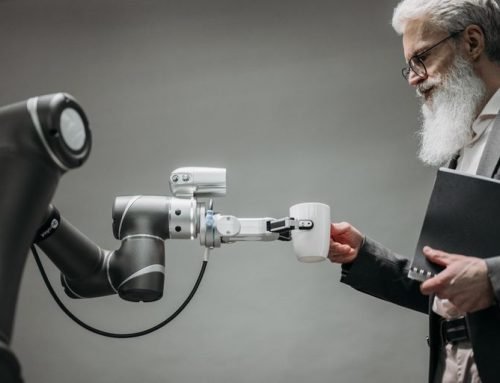
AI does not eliminate the need for human artisans but reconfigures their roles. In design processes, AI acts as both a collaborator and competitor. Consider fashion: designers now use AI to analyze trends, predict consumer preferences, and generate novel patterns. In the luxury sector, platforms
like Iris van Herpen’s couture collections leverage AI to push the boundaries of material innovation. Here, AI amplifies human creativity, providing artisans with tools to explore forms and functions that transcend manual limitations. Yet, this partnership raises a question: if AI co-authors the creation, who holds the mantle of artistry—the artisan, the algorithm, or both?
One of AI’s most celebrated impacts is the democratization of craftsmanship. Platforms such as Etsy increasingly rely on AI to connect artisans with global markets, enabling small-scale creators to reach audiences once reserved for large brands. Simultaneously, tools like AI-driven embroidery
machines or 3D printers empower hobbyists to achieve results previously attainable only by master craftsmen. However, this accessibility risks diluting the rigor of craftsmanship. If everyone can produce, does the value of craftsmanship diminish, or does its definition evolve to embrace accessibility and reproducibility as virtues?
Perhaps the most insidious consequence of AI’s rise is the potential erosion of traditional knowledge systems. Generational transmission of artisanal techniques, whether in Japanese Kintsugi or Indian Chikankari, faces disruption as younger generations gravitate toward digital tools rather than mastering ancestral practices. The digitization of these crafts—though preserving techniques in a static database—risks reducing living traditions to mere simulations, devoid of the cultural and spiritual contexts in which they thrived.
AI is often heralded as a driver of sustainability in craftsmanship, enabling resource-efficient production through precise material use. However, the environmental footprint of AI technologies—ranging from energy-intensive data centers to electronic waste—complicates this narrative. In sectors like woodworking or ceramics, where traditional methods often prioritize local materials and low-impact processes, the introduction of AI presents a paradox: does technological efficiency ultimately undermine the ecological ethos of craftsmanship?
The impact of AI on craftsmanship is neither wholly disruptive nor entirely emancipatory. It invites us to reconsider the values that underpin creative labor—authenticity, intention, and cultural significance. As AI redefines the parameters of what is possible, it challenges humanity to negotiate a balance between innovation and tradition, efficiency and meaning. Ultimately, the relationship between AI and craftsmanship may not be a zero-sum game but an ongoing dialectic, shaping the future of artistry in ways both inspiring and unsettling.
This discourse encourages the reader to grapple with these ambiguities, acknowledging that the true impact of AI on craftsmanship lies not in answers but in the questions it compels us to ask.